Posts

Plataformas de biorrefinería – Almidón
Image
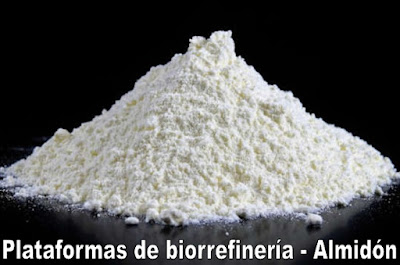
English version PLATAFORMAS DE BIORREFINERÍA Concepto - El almidón es una reserva alimenticia de las plantas. Se fabrica a partir del exceso de glucosa producida durante la fotosíntesis. Se encuentra en el maíz, el trigo, la patata, el arroz, la cebada y muchas otras plantas. - El almidón es un polisacárido complejo formado por una gran cantidad de unidades de glucosa unidas por enlaces glicosídicos. La fórmula química básica de la molécula de almidón es (C6H10O5)n. Consta de dos tipos de moléculas: la amilosa lineal (20-25% en peso) y la amilopectina ramificada (75-80% en peso). - El almidón puro es un polvo suave, blanco, insípido e inodoro que es insoluble en agua fría o alcohol. - La industria del almidón extrae y refina los almidones de semillas, raíces y tubérculos mediante molienda húmeda, lavado, tamizado y secado. Después de la cosecha, las materias primas se limpian y se muelen para convertirlas en pulpa. A continuación, se separan la suspensión de almidón y el jugo. El j...

Biorefinery platforms – Starch

Image
Versión en Español BIOREFINERY PLATFORMS Concept - Starch serves the plants as a reserve food supply. It is manufactured from excess glucose produced during photosynthesis. It is found in maize, wheat, potato, rice, barley and many other plants. - Starch is a complex polysaccharide made up of a large number of glucose units joined together by glycosidic bonds. The basic chemical formula of the starch molecule is (C6H10O5)n. It consists of two types of molecules: the linear amylose (20-25% by weight) and the branched amylopectin (75-80% by weight). - Pure starch is a soft, white, tasteless and odourless powder that is insoluble in cold water or alcohol. - The starch industry extracts and refines starches from seeds, roots and tubers, by wet grinding, washing, sieving and drying. After harvesting, feedstocks are cleaned and grinded into pulp. The starch slurry and juice are then separated. The juice is further processed to produce proteins and concentrated fruit juice. Starch slurry is...

Attero, Nordsol y Titan reciben fondos de la UE para una planta de bio-GNL

Image
English version Tipo de entrada: NOTICIA BREVE. Attero , Nordsol and Titan han conseguido 4,3 M€ de financiación para una planta de producción de bio-GNL. El proyecto FirstBio2Shipping ayudará a descarbonizar el transporte marítimo a través de la producción escalable y descentralizada de bio-GNL. Nota de prensa: “ Titan, Attero, and Nordsol awarded €4,3M in funding for a bio-LNG production plant ”, 13/12/2021. Figure 1. Attero, Nordsol y Titan reciben fondos de la UE para una planta de bio-GNL Se trata de uno de los primeros proyectos en recibir financiación del paquete Fit for 55. La planta, que estará operativa en 2023, producirá alrededor de 2.400 toneladas/año de bio-GNL (biometano licuado) y estará ubicada en las instalaciones de Attero en Wilp (Países Bajos). Suministrará a la infraestructura de abastecimiento de GNL existente. El bio-GNL se origina a partir de residuos orgánicos, particularmente residuos domésticos y agrícolas que están disponibles en abundancia. Att...

Attero, Nordsol and Titan receive funding from the EU for a bio-LNG plant

Image
Versión en Español Type of post: NEWS IN BRIEF. Attero , Nordsol and Titan have been awarded 4,3 M€ in funding for a bio-LNG production plant. The FirstBio2Shipping project will help decarbonize maritime transport through scalable and decentralized production of bio-LNG. Press release: “ Titan, Attero, and Nordsol awarded €4,3M in funding for a bio-LNG production plant ”, 13/12/2021. Figure 1. Attero, Nordsol and Titan receive funding from the EU for a bio-LNG plant It is one of the first projects to receive funding from the Fit for 55 package. The plant, set to be completed in 2023, will produce around 2,400 ton/year of bio-LNG (liquefied biomethane) and will be located at the Attero facility in Wilp (Netherlands). It will supply into existing LNG fuelling infrastructure. Bio-LNG originates from organic waste flows, particularly domestic and agricultural waste that are available in abundance. Attero will produce 6 million Nm3 of biogas per year from domestic biowaste for the...