Posts

Showing posts with the label PLASTIC_RECYCLING

Enval, Greenback and Nestlé Mexico to install a chemical recycling plant in Mexico
Image
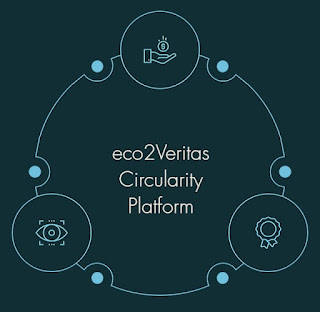
Versión en Español Type of post: NEWS IN BRIEF. Nestlé Mexico has announced the signing of an agreement with Greenback Recycling Technologies to install a chemical recycling plant capable of processing flexible plastic packaging. Press release: “ Deal with Nestlé sees first plant in Mexico for full circularity of food grade plastic packaging ”, 28/09/2021. Figure 1. Greenback's eco2Veritas Circularity Platform. It uses blockchain-based evidence to track, trace and certify the provenance and composition of material throughout the recycling supply chain. This evidence includes camera images, weigh scale data, smart contracts and advanced analysis of waste types, including AI recognition. This platform can work with any type of recycling technology. The plant will employ an innovative microwave-induced pyrolysis technology developed by Enval (UK chemical recycling company) to transform valueless plastic packaging into pyrolysis oil that can be used in the petrochemical indus...

BlueAlp and Shell to form a JV to build two pyrolysis units in The Netherlands

Versión en Español Type of post: NEWS IN BRIEF. Shell Ventures BV and BlueAlp Holding BV have announced a strategic partnership to develop, scale and deploy BlueAlp’s pyrolysis technology. Press release: “ Shell invests in plastics waste-to-chemicals technology company BlueAlp ”, 09/09/2021. The technology transforms plastic waste which is tough to recycle into a recycled feedstock (pyrolysis oil) that can be used to make sustainable chemicals. Shell has taken a 21.25% equity stake in BlueAlp as part of the agreement. BlueAlp’s other shareholders include Dutch family owned Mourik, Rumali and Den Hartog companies and the Belgium Renasci company. Under the agreement, Shell and BlueAlp will form a joint-venture company to build two new conversion units in The Netherlands, which are forecast to convert more than 30 ktons of plastic waste per year. The units are planned to be operational in 2023 and will supply 100% of their pyrolysis oil as feedstock to Shell’s Moerdijk and Rhinela...

BASF, Quantafuel and REMONDIS intend to build a pyrolysis plant for chemical recycling of plastic waste

Image
Versión en Español Type of post: NEWS IN BRIEF. BASF , Quantafuel and REMONDIS have signed a memorandum of understanding to jointly evaluate a cooperation in chemical recycling including a joint investment into a pyrolysis plant for plastic waste. Press release: “ BASF, Quantafuel and REMONDIS want to cooperate on chemical recycling of plastic waste ”, 21/04/2021. Figure 1. BASF’s ChemCycling project (taken from the press release) It is intended that REMONDIS supplies suitable plastic waste to the plant and BASF uses the resulting pyrolysis oil as feedstock in its production Verbund as part of its ChemCycling project. Quantafuel intends to provide the technology and to operate the plant. This company is a specialist for the pyrolysis of mixed plastic waste and the purification of the resulting pyrolysis oil. The location of the pyrolysis plant will be evaluated together. To maximize a circular economy for plastics, the parties will identify which of the waste plastics provide...

Agbar, Enerkem and Repsol intend to build a waste to chemicals plant in Tarragona

Versión en Español Type of post: NEWS. The joint venture Ecoplanta Molecular Recycling Solutions ( Agbar , Enerkem and Repsol ) will build a waste to chemicals plant in Tarragona (Spain). The project has been selected to move into stage 2 of the European Union Innovation Fund, which focuses on highly innovative technologies and big flagship projects within Europe to bring on significant emission reductions. Press release: “ Repsol to join Enerkem and Agbar to build a waste to chemicals plant in Tarragona ”, 27/04/2021. Related posts: - “ Enerkem begins production of cellulosic ethanol from MSW at its Edmonton biorefinery ”, 18/09/2017. - “ Enerkem y Suez team up to set up a waste-to-methanol plant in Spain ”, 10/05/2018. - “ Enerkem and NOVA Chemicals partner to transform MSW into ethylene ”, 14/05/2020. The plant will process around 400,000 tons of non-recyclable municipal solid waste from its surrounding regions and produce 220,000 tons of methanol. This methanol will be used ...

Toyo to build renewable ethylene pilot plant for Sumitomo Chemical

Image
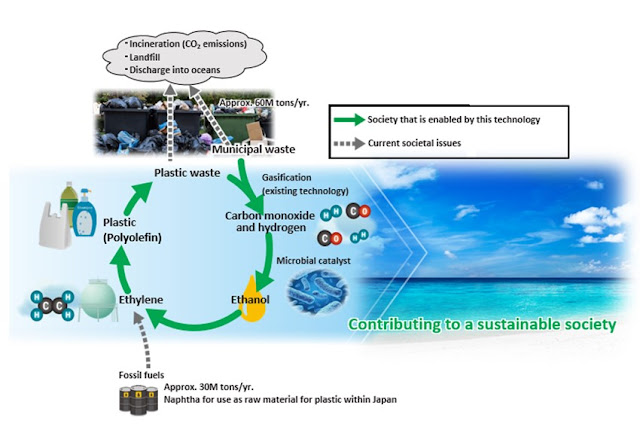
Versión en Español Type of post: NEWS. Toyo Engineering Corporation (Toyo) has been awarded a contract for the project to construct a pilot plant to produce ethylene from waste-derived ethanol, planned by Sumitomo Chemical Company at its Chiba Works. Press release: “ TOYO Awarded Ethylene Pilot Plant Project in Japan Using Waste-derived Ethanol as Raw Material ”, 13/04/2021. Related post: “ Biobased polyolefins - Biobased Polyethylene (bio-PE) ”, 27/05/2020. Figure 1. Sumitomo Chemical and Sekisui Chemical has formed a strategic alliance to deploy technology for manufacturing polyolefins using waste as feedstock (extracted from a Sumitomo press release ) Toyo has worked with Sumitomo Chemical since the basic design of the plant and currently carries out the detail engineering, procurement, and construction under a lump-sum contract, aiming to start demonstration operation of the plant for a short period. In February 2020, Sumitomo Chemical and Sekisui Chemical agreed to form a stra...

Repsol to build a chemical recycling plant for polyurethane foam in Puertollano

Image
Versión en Español Type of post: NEWS IN BRIEF. Repsol plans to build Spain's first chemical polyurethane foam recycling plant at its Puertollano Industrial Complex. It will be capable of processing over 2,000 metric tons of waste per year. Press release: “ Repsol to build Spain's first polyurethane foam recycling plant in Puertollano ”, 18/03/2021. Figure 1. Repsol to build chemical recycling plant for polyurethane foam in Puertollano The polyurethane foam is the main component of mattresses, sofas and vehicle seats. At the end of its useful life, polyurethane foam is one of the most difficult plastics to process. The new recycling facility is expected to be completed by the end of 2022 and will entail an investment of approximately 12 M€. Once operational, the plant will be capable of processing around 2,000 metric tons of polyurethane foam per year. Repsol plans on using this circular economy project to produce circular polyols from recycled polyurethane foam. Polyols ar...

Mura begins construction works on its first commercial-scale advanced recycling plant in Teesside

Image
Versión en Español Type of post: NEWS. Mura has announced that construction has started on the world’s first commercial-scale plant to use its HydroPRS process in Teesside (UK). HydroPRS (Hydrothermal Plastic Recycling Solution) is an advanced technology for plastic recycling. Press release: “ Mura Announce Teesside Project Commences Build & New Partnerships ”, 25/03/2021. Figure 1. Simplified diagram of the Mura process The Teesside plant is expected to be operational in 2022. It will be able to process 80,000 tons of plastic waste per year. On completion, it will have the capacity to avoid up to 120,000 tons of CO2 emissions per year, compared to incineration of the same plastic waste. The project will form the blueprint for a rapid global rollout that will see one million tons of capacity in development worldwide by 2025. Sites are planned in Germany, the US and Asia. Mura’s proprietary HydroPRS process, utilising Cat-HTR technology (developed and owned by Licella Hol...

Agilyx and Nextchem to jointly develop chemical recycling projects based on pyrolysis

Image
Versión en Español Type of post: NEWS IN BRIEF. Agilyx and NextChem have entered into an agreement to support the development of advanced chemical recycling facilities globally. This agreement combines Agilyx’ s pyrolysis technology with NextChem’s expertise in licensing, implementation and EPC services for plastics recycling solutions. Press release: “ Maire Tecnimont Group’s Nextchem and Agilyx sign an agreement for the global deployment of chemical recycling projects based on pyrolysis ”, 15/03/2021. PLASTIC RECYCLING . Figure 1. Agilyx’s polystyrene advanced recycling facility (Tigard, Oregon, USA) Under the agreement, NextChem will act as a technology and EPC partner for Agilyx. The aim of this partnership is to accelerate the implementation of chemical recycling facilities globally, utilizing Agilyx advanced pyrolysis technology in the conversion of mixed waste plastic into circular olefins and circular fuels. With a longstanding expertise in the advanced recycling of p...

Versalis obtains ISCC Plus certification for production from bionaphtha and chemical recycling

Versión en Español Type of post: NEWS IN BRIEF. Versalis , Eni's chemical company, has obtained ISCC Plus certification for monomers, intermediates, polymers and elastomers produced with sustainable raw materials, from bionaphtha and chemical recycling, at the Brindisi, Porto Marghera, Mantua, Ferrara and Ravenna plants. The ISCC Plus certification process, launched at Versalis in 2020, will be extended to other Italian and overseas plants during the year. Press release: “ Versalis: new certified product range for sustainability ”, 16/02/2021. Related post: - “ Eni opens its second HVO biorefinery in Italy ”, 27/09/2019. - “ Chain of custody and blockchain in the bioeconomy and the circular economy – List of examples ”, 19/11/2020. Bionaphtha will be made available through Versalis’ integration with Eni, which has transformed two refineries into biorefineries, in Venice Porto Marghera and in Gela, guaranteeing the supply of sustainable raw materials from vegetable oils, exhausted...

Eastman announces plans for a polyester recycling plant in Tennessee

Image
Versión en Español Type of post: NEWS. Eastman Chemical Company has announced plans to build a plastic-to-plastic recycling facility at its site in Kingsport (Tennessee, USA). Press release: “ Eastman and Governor Lee Announce World-Scale Plastic-to-Plastic Molecular Recycling Facility to be Built in Kingsport, Tenn. ”, 20/01/2021. Figure 1. Coloured PET bottles (taken from the press release) Through methanolysis, the new plant will use over 100 ktons of polyester waste that cannot be recycled by current mechanical methods to produce plastics made with recycled content. This process will not only reduce the company's use of fossil feedstocks, but also reduce its greenhouse gas emissions by 20-30% relative to fossil feedstocks. Methanolysis is a process where methanol is combined with PET to promote a chemical reaction that breaks down it to monomers, its basic building blocks. Those monomers are used to create new polymers that are indistinguishable from polymers created f...

Plastic Energy and SABIC ready to start the construction of a plastic recycling unit

Image
Versión en Español Type of post: NEWS IN BRIEF. SABIC and Plastic Energy are set to start construction of the first commercial unit to significantly upscale production of SABIC’s certified circular polymers (TRUCIRCLE™ portfolio) derived from used plastic. Press release: “ SABIC and Plastic Energy set to start construction of pioneering advanced recycling unit to increase production of certified circular polymers ”, 21/01/2021. Related posts: - “ INEOS and Plastic Energy to collaborate on the construction of new plastic recycling facility ”, 27/04/2020. - “ Chain of custody and blockchain in the bioeconomy and the circular economy – List of examples ”, 19/11/2020. Figure 1. Model of the new advanced recycling unit ready for construction in Geleen (taken from the press release) The unit will be based in Geleen (the Netherlands) and is expected to become operational in the second half of 2022. The project will be realized under the umbrella of a 50-50 joint venture called SPEAR...

Alterra and Neste partner to commercialize waste plastic liquefaction technology in Europe

Image
Versión en Español Type of post: NEWS IN BRIEF.  Neste has announced that it has acquired a minority stake in Alterra Energy , a chemical recycling technology company. This equity investment bolsters Alterra Energy’s expansion.  Press release: “ Neste acquires minority stake in Alterra Energy; companies partnering to commercialize Alterra’s waste plastic liquefaction technology in Europe ”, 04/01/2021. Figure 1. Alterra’s industrial-scale waste plastics liquefaction unit in Akron (Photo: Alterra, taken from the press release)   Alterra’s technology enables a broad range of plastic waste streams from diverse post-consumer sources to be liquefied into a material similar to crude oil. Such material can be flexibly processed and upgraded by companies like Neste into high-quality feedstock for polymers and chemicals production. Alterra’s existing industrial-scale waste plastics liquefaction plant in Akron (Ohio, USA) produces commercial volumes of that renewable oil....

Neste RE – Neste launches a 100% renewable and recycled raw material for plastics and chemicals production

Image
Versión en Español Type of post: NEWS.  Neste is launching a new product, Neste RE, a 100% renewable and recycled raw material for plastics and chemicals production. Also, Royal DSM has just announced that it will start a strategic partnership with Neste to enable the production of high-performance polymers.  Press release 1: " Neste RE enables a future where all plastic products can be made of renewable and recycled materials – and the future starts today " , 26/11/2020.  Press release 2: " Neste and DSM announce strategic partnership to create high performance materials made from sustainable feedstock " , 27/11/2020.  Related posts:  - “ Biobased polyolefins - Biobased Polyethylene (bio-PE) ”, 27/05/2020.  - “ Five minutes with… Mercedes Alonso, Executive Vice President, Renewable Polymers and Chemicals, Neste ”, 21/07/2020.  - “ Neste and LG Chem join forces to develop biobased markets globally ”, 12/11/2020.  Figure 1. Neste launches a 1...

Chain of custody and blockchain in the bioeconomy and the circular economy – List of examples

Versión en Español Series: Chain of custody and blockchain in the bioeconomy and the circular economy  - General concepts   - Mass balance model (1) – Overview and types   - Mass balance model (2) – Case study: Trinseo   - List of examples Biobased feedstocks   [1] Producer: BASF | Certification: REDcert2.  Products: Expandable polystyrene (Styropor® BMB and Neopor® BMB), polyamide (Ultramid) and polyisobutene (OPPANOL® B 12 BMBcert™).  BASF website: “ BASF's biomass balance approach: saving fossil resources in the production of EPS ” (accessed on 03/11/2020).  BASF website: “ Ultramid® Polyamide (PA) for textile applications ” (accessed on 03/11/2020).  BASF website: “ OPPANOL® Made to innovate – designed to stay ahead ” (accessed on 03/11/2020).  [2] Producer: Borealis | Certification: ISCC PLUS.  Product: Polypropylene | Feedstock: Biobased naphtha produced by Neste from oils and fats.  BRB post: “ Borealis is produc...

Chain of custody and blockchain in the bioeconomy and the circular economy – Mass balance model (2) – Case study: Trinseo

Image
Versión en Español Series: Chain of custody and blockchain in the bioeconomy and the circular economy  - General concepts   - Mass balance model (1) – Overview and types   - Mass balance model (2) – Case study: Trinseo  - List of examples The company  Trinseo is a global materials solutions provider and a manufacturer of plastics, latex binders and synthetic rubber. The company focuses on delivering innovative and sustainable solutions to help its customers create products that are intrinsic to how we live, products that touch lives every day across a wide range of end-markets.  Fast Facts:  - $3.8 billion in revenue (2019).  - Approximately 2,700 employees.  - 17 manufacturing sites, 11 research and development facilities.  - Six business segments: Latex Binders / Synthetic Rubber / Performance Plastics / Polystyrene / Feedstocks / Americas Styrenics.  Sustainable product portfolio commitment   In July 2020, Trinse...

Chain of custody and blockchain in the bioeconomy and the circular economy – Mass balance model (1) – Overview and types

Image
Versión en Español Series: Chain of custody and blockchain in the bioeconomy and the circular economy  - General concepts   - Mass balance model (1) – Overview and types - Mass balance model (2) – Case study: Trinseo - List of examples Introduction The chemical industry uses a small number of feedstocks to generate tens of thousands of different products. A large part of this production starts in the steam cracker in the conventional petrochemical industry, where steam is used to split naphtha (a mix of long-chain hydrocarbons) into smaller molecules (hydrogen, methane, ethylene and propylene). These molecules then serve as the building blocks for downstream production (plastics, coatings, solvents…).  There is an arising availability of renewable naphtha coming from biobased and recycled feedstocks. Deploying new dedicated biorefineries and circular refineries as well as the application of identity preservation and segregation models in existing facilities entail...