Posts

Showing posts with the label BIOBASED_BUTANOL

Celtic Renewables completes the construction of its biorefinery in Scotland

Image
Versión en Español Type of post: NEWS IN BRIEF. Celtic Renewables has confirmed the completion of its biorefinery in Caledon Green (Grangemouth, Scotland). News (insider.co.uk): “ Celtic Renewables confirm completion of Scotland's first biorefinery ”, 28/10/2021. Related posts: - “ Celtic Renewables to build plant for demonstrating production of biobutanol from whisky residue ”, 19/12/2017. - “ Celtic Renewables biorefinery construction hits a major milestone ”, 18/09/2020. Figure 1. Caledon Green plant (taken from the website of Celtic Renewables) The facility, built by Muir Construction , will process the residues from local distilleries to produce high value sustainable biochemical products (acetone, butanol and ethanol) to displace existing petrochemicals, as well as a high protein sustainable animal feed product. The Caledon Green Plant will be the company’s flagship demonstration facility and the springboard for the commercialization of its process technology across th...
Gevo re-starts production operations at Luverne

Image
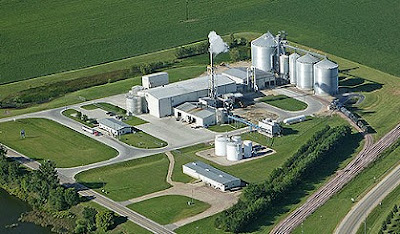
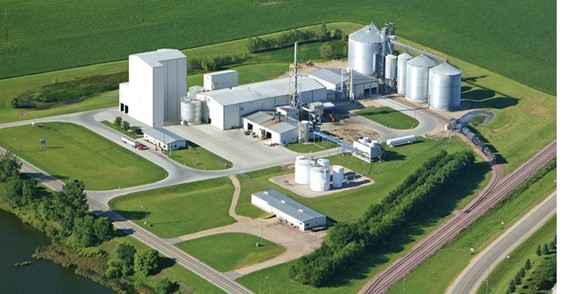
Versión en Español Type of post: NEWS IN BRIEF. Gevo has announced that production operations at its advanced, renewable fuels production facility located in Luverne (Minnesota, USA) have re-commenced. Press release: “ Gevo's Luverne Facility Re-Starts Production Operations ”, 04/08/2021. Related post: “ Gevo intends to build a renewable fuels production plant in Lake Preston ”, 03/09/2018. Figure 1. Gevo biorefinery in Luverne The Luverne Facility is expected to produce fuel-grade, renewable isobutanol (“IBA”). The IBA produced will be used as a feedstock for Gevo to produce sustainable aviation fuel ( Alcohol-To-Fuel ) and premium gasoline ( Renewable gasoline ) to fulfill existing sales contracts. These renewable hydrocarbons will be produced in Silsbee (Texas, USA) at the South Hampton Resources, Inc. hydrocarbon production facility. Gevo also expects to utilize some of the IBA produced to develop certain IBA specialty markets. Moreover, the production operations at the L...

Celtic Renewables biorefinery construction hits a major milestone

Image
Versión en Español Type of post: NEWS IN BRIEF.  The construction of the biobutanol biorefinery of Celtic Renewables in Grangemouth (Scotland) has taken a significant step forward with the arrival of six purpose-built 130,000-litre fermentation vessels from the Netherlands.  Press release: “ Celtic Renewables Biorefinery Sparks Boost For Scotland’s Green Economic Recovery ”, 15/9/2020.  Related posts: “ Celtic Renewables to build plant for demonstrating production of biobutanol from whisky residue ”, 19/12/2017.   Figure 1. Six 130,000-litre fermentation vessels arrive at Celtic Renewables biorefinery   The implementation of Covid-19 restrictions in March prevented the arrival and installation of the vessels at Celtic Renewables’ new plant. Now, six months on, the pioneering project is back on track. Celtic Renewables apply microbiology expertise and modern process technology to produce high-value low-carbon biochemicals and next generation biofuel from bi...

Green Biologics shuts down its Minnesota biorefinery

Image
Type of post: NEWS. Bad news from the biobased chemical sector. Green Biologics Ltd  (GBL) has announced through a succinct press release on its website that it is shutting down its Little Falls (Minnesota) biorefinery: “After a detailed review, the Board of Green Biologics Limited (GBL) has concluded that it is not possible to secure funding to enable it to continue with its plan to build up sales and production levels of renewable butanol and acetone at the Group’s Little Falls, Minnesota plant to the point of cash break-even. Accordingly, given this withdrawal of financial support, the Board and Managements of its subsidiary companies, Green Biologics, Inc., and Central Minnesota Renewables LLC have commenced an orderly closure of operations and wind-down of those corporations for and subject to any actions by their creditors. In the short term the Board of GBL will be considering strategic options for the future of GBL.”. Figure 1. GBL plant in Little Falls Bac...

Gevo y Praj se asocian para comercializar isobutanol, queroseno e isooctano renovables en la India

Image
Tipo de entrada: NOTICIA. Gevo, Inc.  (Gevo) y  Praj Industries Ltd  (Praj) mantienen una relación de larga duración basada en su visión compartida de la utilización de recursos renovables y energía renovable para descarbonizar los combustibles del transporte. En noviembre de 2015, firmaron un acuerdo de licencia y un acuerdo de desarrollo conjunto hacer posible que la tecnología de producción de isobutanol de Gevo fuese licenciada a empresas que procesan azúcares no procedentes de maíz, incluyendo la mayor parte de la base global de clientes de Praj formada por propietarios de plantas de etanol. De conformidad con esos acuerdos, Praj adaptó la tecnología de Gevo para utilizar caña de azúcar y melaza como materias primas y, en julio de 2017, confirmaron que la adaptación estaba lista. Entrada relacionada: " Gevo y Praj comercializan tecnología para producir biobutanol a partir de jugo de azúcar de caña y melaza ", 31/7/2017. Figura 1. Gevo y Praj se asocian ...

Gevo and Praj team up to commercialize renewable isobutanol, jet fuel and isooctane in India

Image
Type of post: NEWS. Gevo, Inc.  (Gevo) and  Praj Industries Ltd  (Praj) keep a longstanding partnership based on their shared vision of the utilization of renewable resources and renewable energy to decarbonize transportation fuels. In November 2015, they entered into a license agreement and a joint development agreement to enable the licensing of Gevo’s isobutanol technology to processors of non-corn based sugars, including the majority of Praj’s global customer base consisted of ethanol plant owners. Pursuant to those agreements, Praj adapted Gevo’s technology to use sugar cane and molasses feedstocks and, in July 2017, they confirmed that the adaptation was ready. Related post: “ Gevo and Praj commercialize technology to produce biobutanol from sugar cane juice and molasses ”, 31/7/2017. Figure 1. Gevo and Praj Industries to commercialize renewable isobutanol, jet fuel and isooctane in India The partnership continues to take concrete steps and ...

Celtic Renewables to build plant for demonstrating production of biobutanol from whisky residue

Image
Type of post: NEWS IN BRIEF. Celtic Renewables Ltd , a Scottish start-up, has secured permission from Falkirk Council to build a demonstrator plant in Grangemouth. The company has developed a ground-breaking application for producing biobutanol based on the traditional ABE fermentation. Working closely with Tullibardine Distillery in Perthshire, Celtic Renewables is helping to derive value from the production residues of the malt whisky industry in Scotland (currently produces almost 750,000 tons of draff and 2 billion litres of pot ale) by converting it into advanced biofuel and other high value low carbon products. Celtic Renewables has established a new public limited company (Celtic Renewables Grangemouth PLC) specifically to deliver this plant and has launched a funding campaign seeking to raise 5.25 M£ through a p2p investment platform: Abundance Investment . Figure 1. Schematic representation of the process of Celtic Renewables (extracted from the web site of th...

Gevo and Praj commercialize technology to produce biobutanol from sugar cane juice and molasses

Image
In November 2015, Gevo, Inc. (Gevo) and Praj Industries Ltd (Praj) entered into a license agreement and a joint development agreement to enable the licensing of Gevo’s isobutanol technology to processors of non-corn based sugars, including the majority of Praj’s global customer base consisted of ethanol plant owners (see press release ). And, it should be recalled that Praj counts on over 750 references across five continents. The Indian company would provide the EPC services for the eventual projects and Gevo would be the direct licensor of its technology to the end customers. Both firms intended to license up to 250 million gallons of biobutanol capacity over the next ten years under this partnership. The agreement covered the development and optimization of Gevo’s isobutanol technology for use with feedstocks as sugar cane, sugar beets, cassava, rice, sorghum, wheat and certain cellulosic sugars. News is that the adaptation of Gevo’s technology to sugar cane juice and molas...

Butamax will produce biobutanol in a newly acquired facility in Kansas

Image
Butamax Advanced Biofuels LLC , the joint venture between BP and DuPont , announced on 3 rd April the acquisition of Nesika Energy LLC and its ethanol facility (see press release and further details ). The company intends to add isobutanol capacity to this plant located in Scandia (Kansas, USA) and it will start immediately the detailed engineering. The facility will continue producing ethanol before and after adding this capacity. DuPont, BP and Butamax have worked collaboratively with the state of Kansas, partnering with the state on economic incentives and job creation is key to the success of the project. Figure 1. Butamax's newly acquired plant in Scandia (extracted from the press release) Biobutanol is commonly used to refer to the butanol produced from biomass. It was traditionally obtained by the ABE process (as n-butanol) and, at present, several players involved in the biobutanol production are developing modifications of the original ABE process. Other...

Green Biologics starts shipments of biobutanol and acetone from its Little Falls biorefinery

Image
During the first decades of the past century, ABE fermentative process was widely utilized to produce n-butanol using strains of bacteria from the class Clostridia . However, it began to experience a decline by the 1960´s and, since that time, most butanol is produced commercially from fossil fuels. At present, several players involved in the biobutanol production are developing modifications of the original ABE process (learn more about biobutanol biorefineries ). Green Biologics Ltd (GBL), a UK industrial biotechnology and renewable specialty chemicals company, is one of them. GBL is focusing on metabolic engineering of the Clostridium strains to optimize the yield of n-butanol. And, it has taken significant steps in the right direction. Last one, the start of commercial shipments of biobutanol and acetone from its manufacturing facility in Minnesota (see press release ). Both butanol and acetone products carry the brand name BioPure™ and have recently received USDA BioPreferre...

Gevo and Lufthansa sign agreement for commercial supply of renewable Alcohol-To-Jet Fuel

Image
Gevo has been producing Alcohol-To-Jet (ATJ) fuel in its biorefinery at South Hampton Resources’ facility in Silsbee (TX) since 2011. The plant has an input capacity of approximately 5-10 thousand gallons of isobutanol (from Gevo’s fermentation facility in Luverne) per month and produces testing volumes for commercial airlines. Simultaneously, it has been working toward commercializing this ATJ fuel envisaging its potential to be an aviation biofuel alternative at competitive cost. Below, a summary of some of the steps taken in this road toward commercialization that culminates in an important fact announced yesterday. Figure 1. Gevo’s fermentation facility in Luverne. Gevo’s first commercial hydrocarbons facility is intended to be built there. After six years of rigorous performance assessments conducted by ASTM International, Gevo received the ASTM certification for its ATJ fuel in Q1 2016. ASTM International included alcohol to jet synthetic paraffinic kerosene (ATJ-S...

Biobutanol biorefineries

Image
Publication date: 08/02/2016 Last update: 18/12/2017 General description 1,2,3,4,5,6,7 Butanol is a four-carbon alcohol with chemical formula C 4 H 10 O. There are four possible isomers for this molecule: n-butanol, isobutanol, tert-butanol and sec-butanol. Their different structures have a straight impact on their physical and chemical properties. Figure 1. Isomers of butanol Biobutanol is commonly used to refer to the butanol produced from biomass. n-Butanol is the major natural product formed in ABE fermentation. Isobutanol can be produced in alcoholic fermentation. sec-Butanol cannot be directly obtained by fermentation although it can be generated via 2,3-butanediol from fermentative processes. tert-Butanol is not produced by any known biological route. For the purposes of this post, biobutanol will stand for n-butanol, isobutanol or both of them, depending on the case. Butanol formation through anaerobic bacteria fermentation was already observed by ...