Posts

Showing posts matching the search for label:CELLULOSIC_ETHANOL

Granbio is ready to export its cellulosic ethanol to European countries

Image
Versión en Español Type of post: NEWS IN BRIEF. Bioflex Agroindustrial has achieved an internationally recognised certification from the Roundtable on Sustainable Biomaterials (RSB), a global standard for biofuels and other biobased and circular fuels and materials. Press release: “ Granbio achieves RSB certificate for its cellulosic ethanol in Europe ”, 26/04/2021. GranBio’s RSB Certificate and Audit Summary Report . CELLULOSIC ETHANOL . Figure 1. BioFlex® 1, the first biorefinery producing cellulosic ethanol on a commercial scale in the Southern Hemisphere Part of GranBio , a Brazilian biotechnology company and pioneer in the production of cellulosic ethanol in the Southern Hemisphere, Bioflex Agroindustrial’s certificate demonstrates compliance with both RSB’s robust sustainability requirements and the regulatory requirements of RED (EU sustainability criteria and traceability requirements for biofuels and bioliquids). The certificate demonstrates that the 2G ethanol biofuel...

Chempolis and Fortum sign a collaboration agreement until 2023

Image
Versión en Español Type of post: NEWS IN BRIEF. Biorefining company Chempolis and energy company Fortum have signed a collaboration agreement until 2023. Press release: “ The collaboration between Chempolis and Fortum is deepening ”, 11/06/2020. Related posts: - “ Fortum considering to invest in a pilot biorefinery based on Chempolis technology ”, 24/10/2016. - “ Chempolis, Fortum and NRL seal a deal for the building of a cellulosic ethanol biorefinery in India ”, 5/5/2018. - “ Fortum launches a project to refine agro residues and woody biomass into high-value products ”, 16/1/2019. - “ The construction of the Chempolis biorefinery in Assan has been officially launched ”, 14/2/2019. Figure 1. Chempolis and Fortum sign a collaboration agreement until 2023 (taken from the press release) Under the agreement, Chempolis will perform test runs of cellulose, hemicellulose and lignin samples for Fortum´s needs at its test facility in Oulu, as well as engineering...

Preliminary plans for the construction of a cellulosic ethanol biorefinery in Bosnia

Type of post: NEWS IN BRIEF. According to SeeNews (see news , 8/12/2017), a company specialized in business news and market intelligence on Southeast Europe, the Bosnian Timemedia and the Italian Goldwater SRL are showing interest towards construction of a biorefinery for cellulosic ethanol production in Bosnia's Serb Republic entity (Serb Republic is one of two entities that make up Bosnia and Herzegovina, the other is the Federation). The government of the Serb Republic has said it will soon sign a cooperation protocol with the companies, following which they will start securing financial and other resources for the project. The biorefinery is planned to be located in Bosnia's north-eastern region of Semberija. No further information is available. When further information is available, it will be included in the list and map of cellulosic ethanol biorefineries at commercial scale .

Cellulosic ethanol – The basics: Concepts and feedstocks

Image
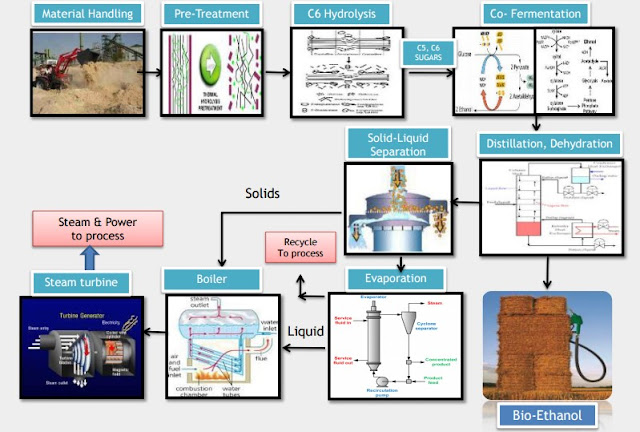
Versión en Español Section: ADVANCED BIOFUELS Series: Cellulosic ethanol - The basics: Concept and feedstocks - The basics: Conversion pathway – Biochemical - The basics: Conversion pathway – Thermochemical - Cellulosic ethanol biorefineries at commercial scale Posts: CELLULOSIC ETHANOL 1. General concepts Ethanol (also known as ethyl alcohol, grain alcohol, drinking alcohol or just alcohol) is a volatile, flammable, colourless liquid with the molecular formula C 2 H 6 O (it can be also written as CH 3 CH 2 OH and C 2 H 5 OH) and is often abbreviated as EtOH. The European Renewable Ethanol Association (ePURE) states that the ethanol market can be broadly split into three segments: (1) Fuel : Ethanol used as an additive in petrol or as an alternative fuel. (2) Potable : Ethanol used to produce spirit drinks, as a food additive, for the extraction of aromas, for food preservation and the production of white vinegar. (3) Industrial...

Clariant and Pertamina collaborate in the assessment of cellulosic ethanol production from Indonesian untapped biomass

Image
Versión en Español Type of post: NEWS IN BRIEF. Clariant is working with Pertamina (Indonesia's state-owned oil and gas corporation) to evaluate and test the feasibility of Clariant's sunliquid® technology to process available regional feedstocks in Indonesia into cellulosic ethanol . Press release: - “ Clariant collaborates with Indonesia's Pertamina in advanced biofuels assessment ”, 19/04/2021. Related posts: - “ Harbin Hulan Sino-Dan Jianye Bio-Energy plans to build a cellulosic ethanol plant in China with Clariant’s sunliquid® technology ”, 02/02/2021. - “ Clariant moves forward with the installation of the Valmet pretreatment BioTrac at the cellulosic ethanol biorefinery in Podari ”, 05/04/2021. Figure 1. Pertamina's project team visiting Clariant's pre-commercial sunliquid® plant in Straubing at the end of 2019 (Photo: Clariant) In Indonesia, ethanol demand is expected to increase dramatically, spurred primarily by a nationwide E10 ethanol blending mand...

USA’s first bagasse-based biorefinery will deploy Praj’s Enfinity technology

Image
Type of post: NEWS. Praj Industries has announced that its Enfinity technology will be deployed to produce ethanol and other co-products in what would be USA’s first sugarcane bagasse based biorefinery. Press release: “ Praj’s 2G Ethanol Technology for USA’s First Ever Bagasse-based Bio-Refinery ”, 3/9/2019. Figure 1. The feedstock of the biorefinery promoted by Omega Energy USA and Lasuca Sugar will be sugarcane bagasse The biorefinery is being jointly promoted by Omega Energy USA (a developer of renewable energy projects headquartered in Florida) and Lasuca Sugar (a producer of cane sugar based in Louisiana). The second one will supply bagasse feedstock. The promoters have issued a formal letter confirming their interest to engage Praj for developing the design and project program for a cellulosic ethanol biorefinery in USA. Lasuca and Omega Energy are in the process of completing necessary formalities for the project. Location Cane-sugar belt o...

Pacific Ethanol will produce cellulosic ethanol in Madera using Edeniq technologies

Image
It is possible to add value to existing first generation (1G) bioethanol production facilities through the hybridization of first and second generation (2G) technologies. In this post, I will refer specifically to the ability to convert corn kernel fiber into cellulosic ethanol (some call it 1.5G technology). That is what Pacific Ethanol , producer and marketer of low-carbon renewable fuels, is intended to implement in its Madera plant (California). This company and Edeniq , a biorefining technology developer, announced last week that they had entered into a licensing and purchase agreement to enable the production of cellulosic ethanol at the Madera facility using Pathway™ and Cellunator™ technologies (see press release ). Pacific Ethanol began producing cellulosic ethanol using Edeniq’s technologies at its Stockton plant (California) in December 2015. Therefore, they will now be installed at two Pacific Ethanol plants. The Madera plant has a total annual production capacity of...

Chempolis, Fortum and NRL seal a deal for the building of a cellulosic ethanol biorefinery in India

Image
Type of post: NEWS. On 14th February 2016, Chempolis announced the establishment of a joint venture with Numaligarh Refinery Limited (NRL, a state-owned Indian oil company) to build a cellulosic ethanol biorefinery using formicobio™ technology in the state of Assam in Northeast India (see “ Chempolis and NRL to build advanced biorefinery in India ”, 22/2/2016). At that time, the details about the timeline were not disclosed and, until now, advances on the status of the project were not known. Three days ago, Chempolis announced the creation of a new joint venture to construct the biorefinery in Assam (see press release , 2/5/2018). Now, Fortum , a Finish energy company, has associated with the two former members. Project key data Location Numaligarh (Assam, Northeast India). Feedstock and processing capacity 300,000 tons of bamboo from the vast natural and cultivated bamboo reserves of Northeast India. Products and producti...

The construction of the Chempolis biorefinery in Assan has been officially launched

Image
Type of post: FLASH NEWS. - Chempolis together with Numaligarh Refinery Limited (NRL) and Fortum 3 BV (100% subsidiary of Fortum Oyj) established the joint venture Assam Bio Refinery Private Limited in 2018 for building and operating a biorefinery in Assam (India). - The ceremony of the foundation stone laying was held on 9th February honoured by the presence of the Prime Minister Shri Narendra Modi and representatives of the companies. - The construction of the biorefinery is expected to be completed by June 2021. For more information about the project, see the related posts below. Chempolis press release: “ Foundation stone laid for the bio-refinery in Assam, India ”, 12/2/2019. News: “ Prime Minister Shri Narendra Modi Laid Foundation Stone For Bio Refinery Project In Assam ”, NRInews24x7 , 11/2/2019. Related posts: - “ Chempolis, Fortum and NRL seal a deal for the building of a cellulosic ethanol biorefinery in India ”, 5/5/2018. - “ Chempolis and NRL to buil...

Borregaard to revamp its 2G ethanol plant

Image
The plant of Borregaard in Sarpsborg is one of the most obvious examples of the forest biorefineries potential. By using wood as a raw material, this facility produces sustainable chemicals, biomaterials and biofuels (read more about the Sarpsborg Biorefinery ). The transition from a traditional pulp and paper mill towards an integrated biorefinery started long time ago with the first delivery of dissolving pulp for textiles in 1921 and the production of bioethanol in 1938. Such bioethanol is obtained by extracting sugar compounds from wood which then are fermented. Currently, it has a production of 20 million litres per year, which is used for biofuels and other chemical and pharmaceutical applications. The market for this 2 nd generation ethanol is growing, mainly driven by increased demand in automotive fuel, and Borregaard has decided to invest NOK 63 million (about EUR 7 million) in a project which includes an upgrade of the bioethanol plant and a facility to capture and ...

Fibenol and Novozymes partner on lignocellulosic biorefining

Type of post: NEWS IN BRIEF. Based on significant advancements over the past 5 years, Fibenol is now starting up its first lignocellulosic biorefinery in Imavere. The recalcitrant lignocellulosic structures are effectively opened with a combination of Sunburst™ pre-treatment technology and tailored enzymatic cocktails from Novozymes. This combination provides more than 90% conversion of birch wood processing residues into high-quality cellulosic sugars and co-products, including high-purity lignin. Press release: " Novozymes & Fibenol have entered a commercial partnership to demonstrate lignocellulosic biorefining on an industrial scale ", 02/04/2023.

Danish 2G bioethanol project to get back on its feet

Image
The project to build the 2G bioethanol plant in the Maabjerg Energy Center (MEC) was going through difficult times in 2016. In fact, in October last year, it was announced in a press release that the parties behind the project had decided not to go ahead with the biorefinery near Holstebro in Central Jutland. Jørgen Udby, Chairman of the Board for MEC, said at that time: “It's a great shame that we're now forced to make the tough decision to drop the project. We have an extremely well-designed project, which has been scrutinised from all angles over five years.” The consortium stated that the project would be put on hold as a consequence of not being able to find a political majority to support the idea of providing public guarantees for the investment. Instead, they were encouraged to look for private investors. However, the project seems to have found new impetus. Last month, the London based investment firm Pioneer Point Partners confirmed in a letter of intent tha...

Kemin launches dry cellulase for corn kern fiber

Versión en Español Type of post: NEWS IN BRIEF. Kemin Biofuels (part of Kemin Industries ) has expanded its enzyme portfolio with ZyloCell™, a dry cellulase for use in bioethanol plants that breaks down cellulose in corn kernel fiber. Press release: “ Kemin Launches Dry Cellulase ZyloCell™ to Support Biofuels Industries' Low-carbon Initiatives ”, 25/03/2021. Related post: “ Corn fiber ethanol – Examining 1.5G technologies ”, 26/04/2019. ZyloCell is a cost-effective alternative to liquid enzyme formulation. In addition to increased bioethanol production, it provides bioethanol producers the following benefits: 12-month stability for longer shelf life without refrigeration; concentrated for less storage space; dry powder for easier handling and accurate dosing.

Praj receives confirmation to initiate work on commercial scale cellulosic ethanol plant for BPCL

Image
Type of post: NEWS IN BRIEF. Before of the end of 2016, the Blog reported that Praj had signed agreements with two Indian Oil Marketing Companies (OMC) to set up three cellulosic ethanol biorefineries in India ( Agreements to set up several cellulosic ethanol biorefineries in India , 23/12/2016). Through one of them, Praj and Bharat Petroleum Corporation Limited (BPCL) undertook to work together on the construction of a plant at Bargarh (Odisha) with a capacity of 100 kL per day. Early this month, Praj informed on a major milestone towards commencement of the activities related to the plant (see press release , 6/2/2018): BPCL has given a formal confirmation by way of Letter of Acceptance for its proprietary technology, basic engineering and design package for a value of Rs 16.75 cr (approximately, 2 M€). The Letter of Acceptance was awarded to Praj after the performance evaluation of its demo integrated biorefinery located in Pune (Maharashtra). Praj started up this faci...

Sekisui Chemical completes construction of a waste-to-ethanol demo plant

Image
  Type of post: NEWS IN BRIEF. Sekisui Chemical and Sekisui Bio Refinery (SBR) have completed construction of a demonstration plant in Kuji City (Iwate, Japan) with the aim of demonstrating the viability of a technology that converts municipal/industrial waste into ethanol on a commercial scale. This technology uses a microbial catalyst and gas fermentation process that was jointly developed by Sekisui Chemical and LanzaTech. Press release: " 1/10th Scale “Waste to Ethanol” Demonstration Plant Completed in Kuji City ", 11/04/2022. Figure 1. Sekisui Chemical completes construction of a waste-to-ethanol demo plant This first of its kind demonstration plant was constructed with investments from SBR, a joint venture between SEKISUI CHEMICAL and INJC, a private-public fund overseen by the Japanese Ministry of Economy, Trade and Industry (METI). It has also received funding from the Japanese Ministry of the Environment. The parties will use this facility to validate the technology ...

Praj starts up its demo biorefinery based on Enfinity technology

Image
Last December, the Blog reported about several agreements to set up cellulosic ethanol biorefineries in India (see post ). Praj participates in three of them as technology partner of two Oil Marketing Companies (BPCL and IOCL). Its second generation ethanol platform is called Enfinity and it is based on an integrated biorefinery approach. The company has just announced the achievement of an important milestone regarding to the scale up of the technology: the successful completion and start-up of its “smart biorefinery” at demonstration scale (see press release ). In 2009, Praj inaugurated the Cellulosic Ethanol Pilot Plant at Praj Matrix (R&D centre in Urawade). Pilot plant trials validated work done at laboratory scale. Continuing its effort in bringing new technologies to the ethanol industry, it decided to scale up the pilot plant and built a 2G commercial demo plant in 2012. According to some references, the commissioning had been targeted by 2nd half 2014. However, it ...

Cellulosic ethanol biorefineries at commercial scale

Image
Publication date: 12/08/2015. Last update: 11/12/2017. Type of post: Overview. Series: Advanced biofuels. Cellulosic ethanol is an advanced biofuel. A wide range of terms and approaches are used to refer to advanced biofuels and classify them in different generations (type of feedstock, conversion technology, properties of the fuel molecules produced…). Taking into account a definition based on the carbon source from which the biofuel is derived, cellulosic ethanol can be considered as a 2nd generation biofuel. In this generation, the biofuel carbon is derived from cellulose, hemicellulose, lignin or pectin. Cellulosic ethanol is produced by processing lignocellulosic agricultural wastes (straw, corn stover…) or purpose-grown non-food feedstocks (short rotation coppice, energy grasses…). It can be obtained through biological and ther mochemical routes. The end product has the same characteristics as any other type of ethanol and is typically blended with gasoline. GHG emiss...